
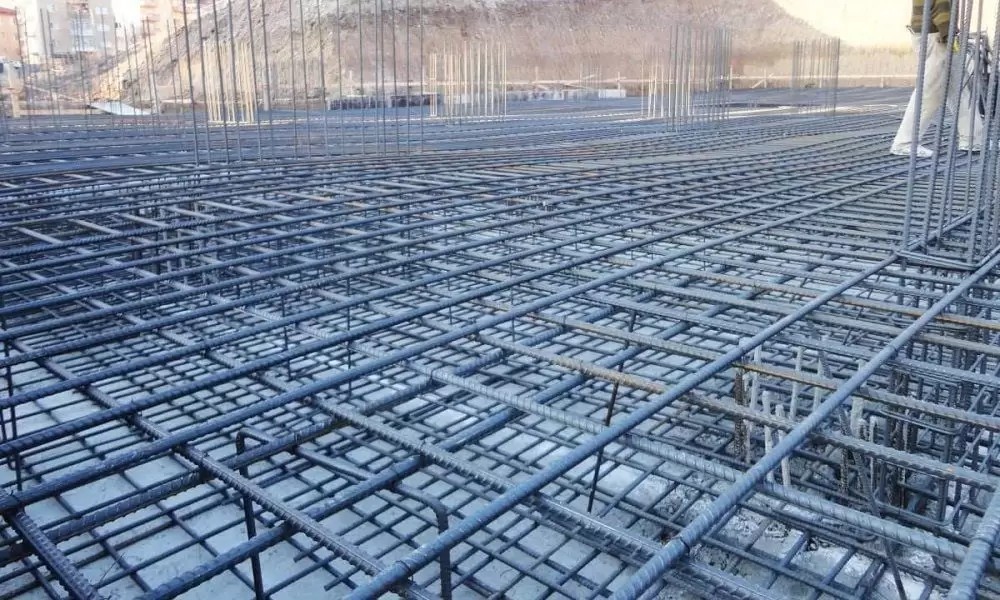
Building on weak or variable soil is one of the biggest challenges in construction. Traditional foundations like isolated footings may not perform well when the ground lacks sufficient strength or uniformity. In such cases, raft foundations-also known as mat foundations-offer a reliable, efficient, and cost-effective solution.
What is a Raft (Mat) Foundation?
A raft foundations is a large reinforced concrete slab that covers the entire footprint of a building. It supports all columns and walls by distributing the structural load across a wide area, reducing pressure on the soil.
Unlike conventional foundations that transfer loads through individual footings, raft foundations act as a single unit, making them ideal for weak and compressible soils.
Why Raft Foundations Are Ideal for Weak Soils
Weak soils such as clay, silt, or loose sand have low bearing capacity and are prone to settlement. Raft foundations help overcome these issues by:
- Spreading loads over a large area
- Reducing soil pressure
- Minimizing uneven settlement
- Improving overall structural stability
This makes them especially useful in areas with inconsistent soil conditions or high groundwater levels.
Key Benefits of Raft Foundations
1. Uniform Load Distribution
The most significant advantage is the ability to distribute loads evenly across the entire building area. This reduces stress concentrations and prevents localized failures.
2. Reduced Differential Settlement
Raft foundations behave as a single rigid unit, helping to minimize differential settlement that can cause cracks and structural damage.
3. Cost-Effective for Large Structures
While the initial cost of concrete and reinforcement may be higher, raft foundations can be more economical than multiple isolated footings in large or heavily loaded structures.
4. Faster Construction
Construction is often quicker because excavation and formwork are simplified compared to multiple individual footings.
5. Suitable for High Water Table Areas
Raft foundations perform well in locations where groundwater is close to the surface, as they provide a stable base without deep excavation.
Design Considerations for Raft Foundations
Designing a raft foundation requires careful planning and engineering expertise. Key factors include:
Soil Investigation
A geotechnical study is essential to determine soil bearing capacity, settlement characteristics, and groundwater conditions.
Load Analysis
Engineers must calculate the total load from the structure, including dead loads, live loads, and environmental forces.
Thickness and Reinforcement
The thickness of the raft and the amount of reinforcement depend on load intensity and soil conditions.
Settlement Control
Proper design ensures that total and differential settlement remain within safe limits.
Drainage and Waterproofing
In high water table areas, proper drainage systems and waterproofing measures are critical.
Types of Raft Foundations
- Flat Plate Raft – Uniform thickness slab for lighter loads
- Beam and Slab Raft – Includes beams for added stiffness
- Cellular Raft – Grid-like structure for heavy loads
- Piled Raft – Combination of raft and piles for extremely weak soils
Applications of Raft Foundations
Raft foundations are widely used in:
- Residential apartments
- Commercial buildings
- Industrial structures
- Warehouses
- Buildings on reclaimed or soft land
They are particularly effective where soil conditions vary across the site or where loads are heavy and concentrated.
Raft Foundation vs Conventional Foundations
Conventional footings are suitable for strong and stable soils, but they may fail or become uneconomical in weak soils. Raft foundations, on the other hand, provide a more stable and unified support system in such conditions.
Conclusion
Raft foundations are a smart engineering solution for construction on weak and variable soils. By distributing loads evenly and reducing settlement risks, they ensure structural stability and long-term performance.
For projects where soil conditions are challenging, investing in a well-designed raft foundation can prevent costly repairs and structural issues in the future.
Before finalizing any foundation system, always conduct a proper soil investigation and consult structural experts to choose the most suitable design.

