
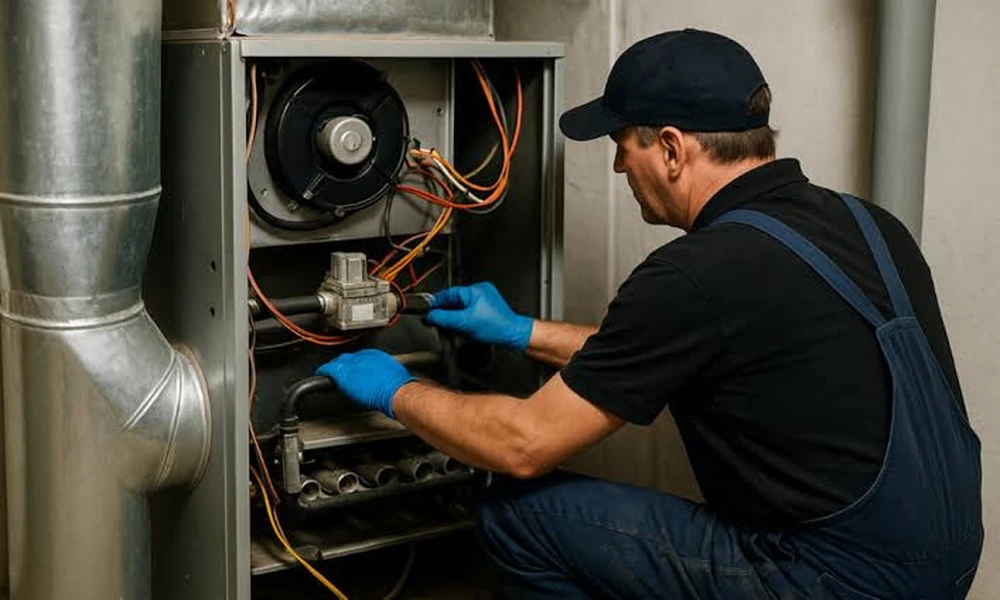
Replacing an older furnace starts with a careful safety evaluation by the experts in Springfield instead of immediate installation. Heating equipment, gas connections, electrical parts, and ventilation should all meet safe operating conditions before replacement begins. Identifying concerns early helps prevent installation delays and supports reliable heating after the new system is in place.
A professional inspection before furnace replacement in Springfield Missouri, helps identify safety concerns that could affect installation or future operation. Existing equipment, surrounding components, and utility connections should all receive careful evaluation before replacement work starts. This preparation reduces avoidable risks while helping the new heating system operate under proper conditions.
Inspect Existing Gas and Vent Connections
Gas piping should remain free from corrosion, loose fittings, and visible damage before replacement work begins. Every connection requires careful inspection because even minor issues can affect safe furnace operation. Correcting these conditions before installation helps create a secure heating system.
Vent pipes should also receive a detailed inspection for cracks, poor alignment, or blockages. Damaged venting may prevent combustion gases from leaving the home as intended. Proper vent conditions support safe furnace performance throughout the heating season.
Check Electrical Components Before Installation
Examine Wiring and Power Connections
Electrical wiring should match the operating requirements of the replacement furnace. Worn insulation, loose terminals, or damaged conductors deserve correction before installation begins. Stable electrical connections reduce unnecessary interruptions after the system becomes operational.
Confirm Safe Disconnect Access
The furnace disconnect should remain accessible and function correctly before replacement takes place. Safe access allows technicians to service the equipment without unnecessary electrical hazards. Proper disconnect placement also supports safe shutdown procedures whenever maintenance becomes necessary.
Evaluate Airflow and Duct Conditions
Airflow problems can reduce heating performance even after a new furnace is installed. Damaged ducts, restricted return airflow, or disconnected sections should receive attention before replacement begins. Balanced airflow helps distribute heated air more effectively throughout the home in Springfield.
A complete inspection commonly includes:
- Damaged or loose duct connections
- Blocked supply and return vents
- Proper air filter condition and placement
- Visible dust buildup inside accessible duct sections
Review Carbon Monoxide Protection
Carbon monoxide detectors should operate correctly before a replacement furnace becomes active. Detector placement, battery condition, and expiration dates deserve careful review during the inspection process. Reliable detection adds another layer of household safety whenever fuel-burning equipment operates.
Visible moisture near vent pipes should also receive immediate attention. Condensation may indicate vent performance concerns that require correction before installation. Resolving these issues helps maintain safe exhaust ventilation.
Verify Thermostat and Indoor Air Equipment Compatibility
The existing thermostat should communicate correctly with the replacement heating equipment. Older controls sometimes require updates to support accurate temperature regulation. Compatibility checks help reduce unnecessary operating concerns after installation.
Additional equipment connected to the heating system also deserves careful evaluation.
- Humidifier connections should remain secure.
- Air filtration equipment should remain compatible with the replacement furnace.
- Control wiring should stay properly connected and protected.
Hire a Furnace Professional in Springfield Who Prioritizes Safety
Professional support before furnace replacement in Springfield Missouri, helps identify safety concerns that may affect installation, system performance, and long-term reliability. Qualified technicians evaluate gas lines, electrical connections, venting, airflow, and other critical components before replacement begins, helping reduce avoidable complications during the project. Careful inspection and proper preparation support safe operation while helping the new heating system perform as intended after installation.
A complete safety inspection provides valuable information before replacement work begins. Professional evaluation identifies concerns that may remain hidden during a basic visual review, including issues with gas supply, electrical components, airflow, and venting. Addressing these conditions before installation helps create a safer environment and supports reliable heating performance throughout the colder months.

