
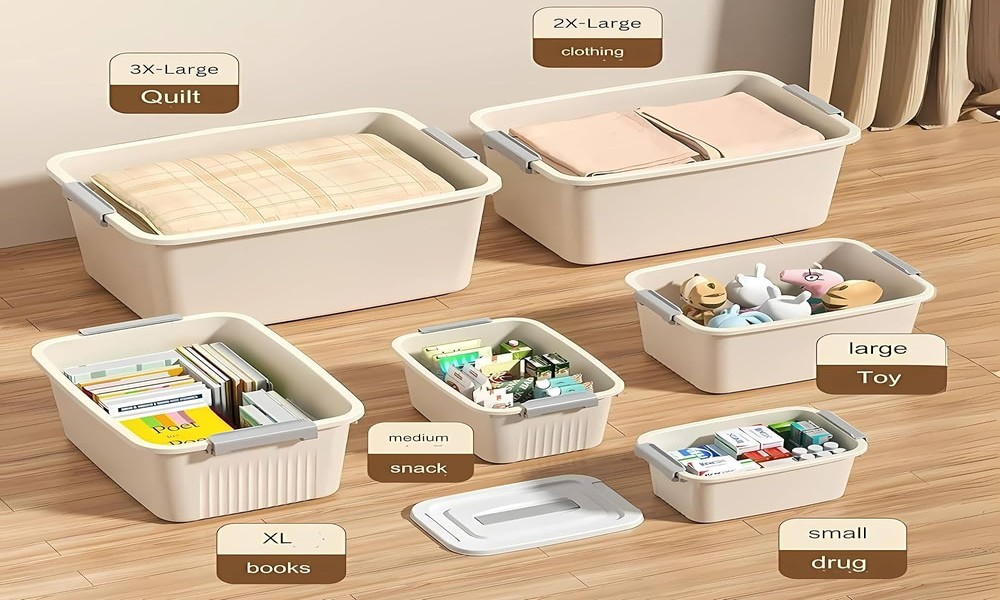
The plastic container for storage with its accompanying lid represents, in its most fundamental form, a solution to one of humanity’s oldest challenges: the preservation and protection of resources against time, contamination, and loss. To understand the significance of this seemingly mundane object requires examining not merely the container itself, but the intricate systems of supply chains, food safety regulations, and economic pressures that have shaped its evolution in Singapore’s particular environment. The lid transforms a simple vessel into a sealed system capable of maintaining freshness, preventing spillage, and stacking efficiently in the limited vertical space that characterises Singapore’s storage realities. This is a story about power. The power to preserve, organise, and prevent waste in a nation where every square metre carries economic weight.
The Mechanics of Sealing: How Lids Actually Work
The plastic container with lid functions through engineering precision built into seemingly straightforward design. Sealing mechanisms include:
- Snap-lock systems creating tension through flexible tabs that grip container rims securely
- Screw-top designs employing thread patterns that compress gaskets against container edges
- Press-seal variants using precise tolerances where lid edges fit snugly into container grooves
The physics are unforgiving. A seal must create sufficient barrier against air and moisture whilst remaining accessible for repeated use. Too loose, and contents spoil or spill. Too tight, and users damage lids through frustrated access attempts. Singapore’s humid climate, where ambient moisture encourages bacterial growth within hours, makes effective sealing essential for food safety and waste prevention.
Industry professionals note that “Singapore’s plastic container standards prioritise lid integrity and seal durability as critical safety factors,” reflecting regulatory frameworks developed after contamination incidents traced to inadequate storage.
The Evolution of Lid Technology
The history of the plastic storage container with lid in Singapore traces the nation’s own development. Early imports featured basic snap-on lids that warped in tropical heat, creating gaps that invited pests and spoilage. Manufacturers responded with improved materials:
- Heat-resistant polypropylene lids maintaining dimensional stability despite temperature cycling between refrigeration and room temperature
- Silicone gasket systems creating hermetic seals for liquid storage without leaking during transport
- Transparent lid construction allowing inventory identification without opening containers and breaking seals
- Nesting capabilities where lids stack efficiently when containers are in use, addressing storage limitations
- Ventilation features with controlled openings for microwave use or produce storage requiring air circulation
Each improvement emerged from specific failures in real-world applications. The ventilated lid developed after repeated incidents of pressure buildup causing lid failure during microwave reheating. The gasket system answered complaints from soup vendors whose containers leaked during delivery.
Commercial Applications and Economic Impact
The plastic container’s role in Singapore’s economy spans multiple sectors. In food service operations, these containers form the foundation of preparation systems. Ingredients arrive from suppliers, get portioned into standardised containers, move through preparation stages, and eventually reach service, all whilst maintaining freshness and traceability.
The economics prove compelling:
- Reduced spoilage rates translate to lower food costs and improved profit margins for restaurants operating on thin returns
- Extended ingredient freshness allows bulk purchasing at better prices without waste from premature spoilage
- Labour efficiency as standardised containers streamline prep work, storage organisation, and cleaning protocols
- Regulatory compliance through sealed storage that meets health department requirements for food safety
- Inventory visibility via transparent containers and lids that eliminate time wasted searching for ingredients
Healthcare facilities depend equally on sealed plastic food containers for specimen transport, medication storage, and sterile instrument protection. Construction sites use industrial variants to protect tools from tropical downpours. Educational institutions manage supplies through organised container systems.
The Infrastructure Behind Daily Life
Observing a hawker centre at dawn reveals the plastic container with lid as fundamental infrastructure:
- Morning arrivals see vendors with ingredients sealed in containers that travelled from home kitchens or supplier warehouses
- Throughout service prepared components move through multiple containers, each sealed against flies, humidity, and contamination
- Evening closure finds leftover ingredients returning home in the same sealed vessels, protected for tomorrow’s service
This system, replicated thousands of times daily across Singapore, represents an invisible architecture of food safety and resource preservation. It functions so reliably that its absence would create immediate crisis. Unsealed storage invites pest infestation, bacterial growth, and ingredient degradation that would shut down food service operations within days.
Households that invest in quality sealed plastic containers reduce grocery waste, extend food budgets, and maintain organisation in compact kitchens where chaos quickly overwhelms limited space. The difference between containers with effective lids and those without becomes apparent through spoiled leftovers, stale ingredients, and the gradual accumulation of waste that strains both budgets and environmental systems.
The Lasting Significance
Power takes many forms. The power embedded in the humble plastic container lies in its capacity to preserve resources, prevent waste, and enable the complex systems that feed cities and support modern life. This is infrastructure that works precisely because it remains unremarkable, performing essential functions without fanfare until its absence creates crisis.

